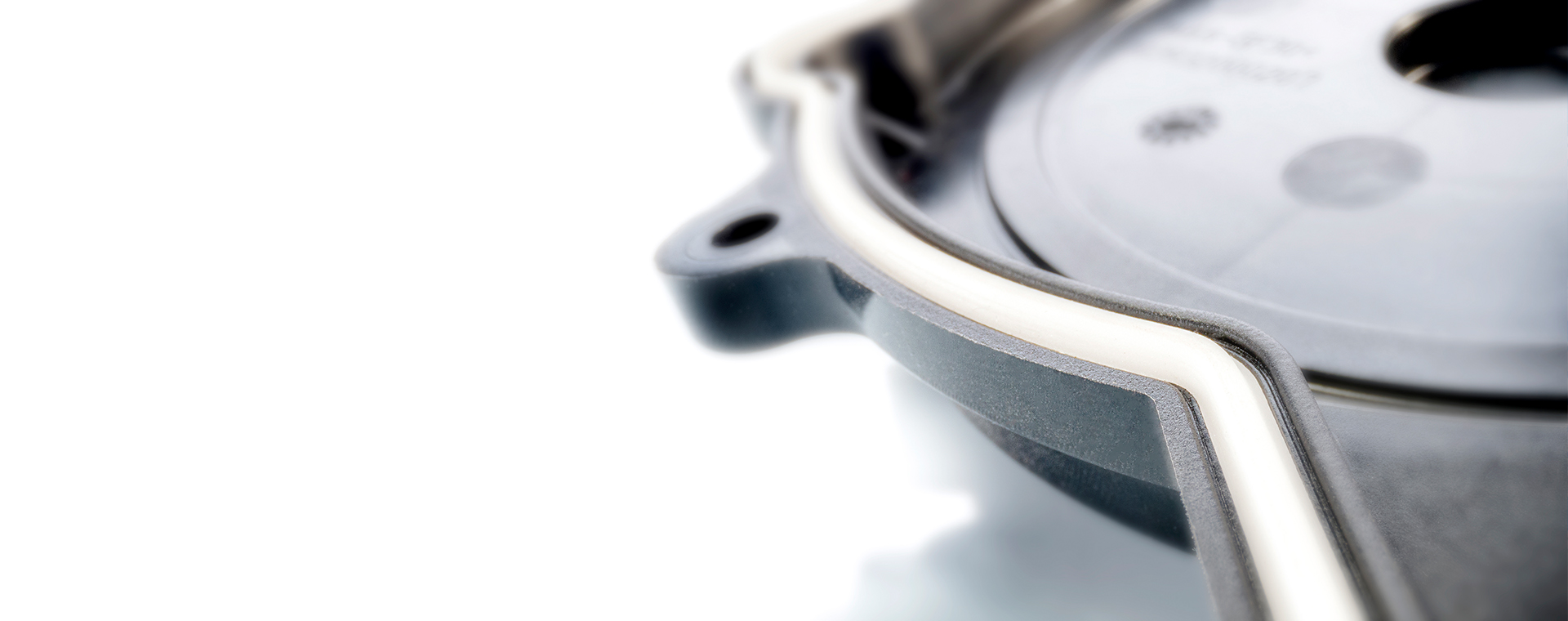
Multi-component injection moulding: turn many into one.
The combination of several plastics in a single injection moulding process not only allows for exciting technical properties, but also greater efficiency in the manufacturing process. We have mastered multi-component injection moulding, for example with thermoplastics and elastomers in combination, thanks to our extensive experience and the right machine equipment.
Multi-component injection moulding: efficient joining of different plastics
In multi-component injection moulding, several effects can be the goal:
- Different colour zones from the same type of plastic
- Different plastics combined in one part
- Assemblies made of different materials that can move freely in relation to each other and are functional without assembly.
Multi-component injection moulding processes are divided into separate components with clearly defined material zones and components that run into each other. The different processes used in multi-component injection moulding always depend on the right technology in the mould and in the injection moulding machine – and last but not least, of course, on the perfect coordination of all process elements with each other.
Multi-component injection moulding processes: techniques and advantages
Turning, shifting, transfer technology
Coinjection
Sandwich process
With the rotate/push technique, the mould is moved to a new position after the first injection pass and the pre-moulded part already inside is overmoulded with the next material.
With core retraction technology, a core is pulled out of the mould after the first injection process to make room for the next component to be injected.
In the transfer technique, a pre-moulded part that has already been injected is transferred to a new mould and injected with the next component.
In co-injection, two plastics are injected into the mould simultaneously via an injection nozzle. This creates the core of the desired part from one plastic and its shell from the other.
The sandwich process achieves a similar result to coinjection; a shell is also formed from one material and a core from the other.
The most important advantages of multi-component injection moulding at a glance
- Functional improvement of parts, e.g. hard-soft
- Optical improvement of parts, e.g. multiple colours
- Greater efficiency in series production thanks to shorter process times
- Better durability of parts due to elimination of subsequent connections
- Elimination of assembly work
Your direct contact for multi-component injection moulding

Project Management
07721 7509-8521
ingo.hoefner@ke-technik.de