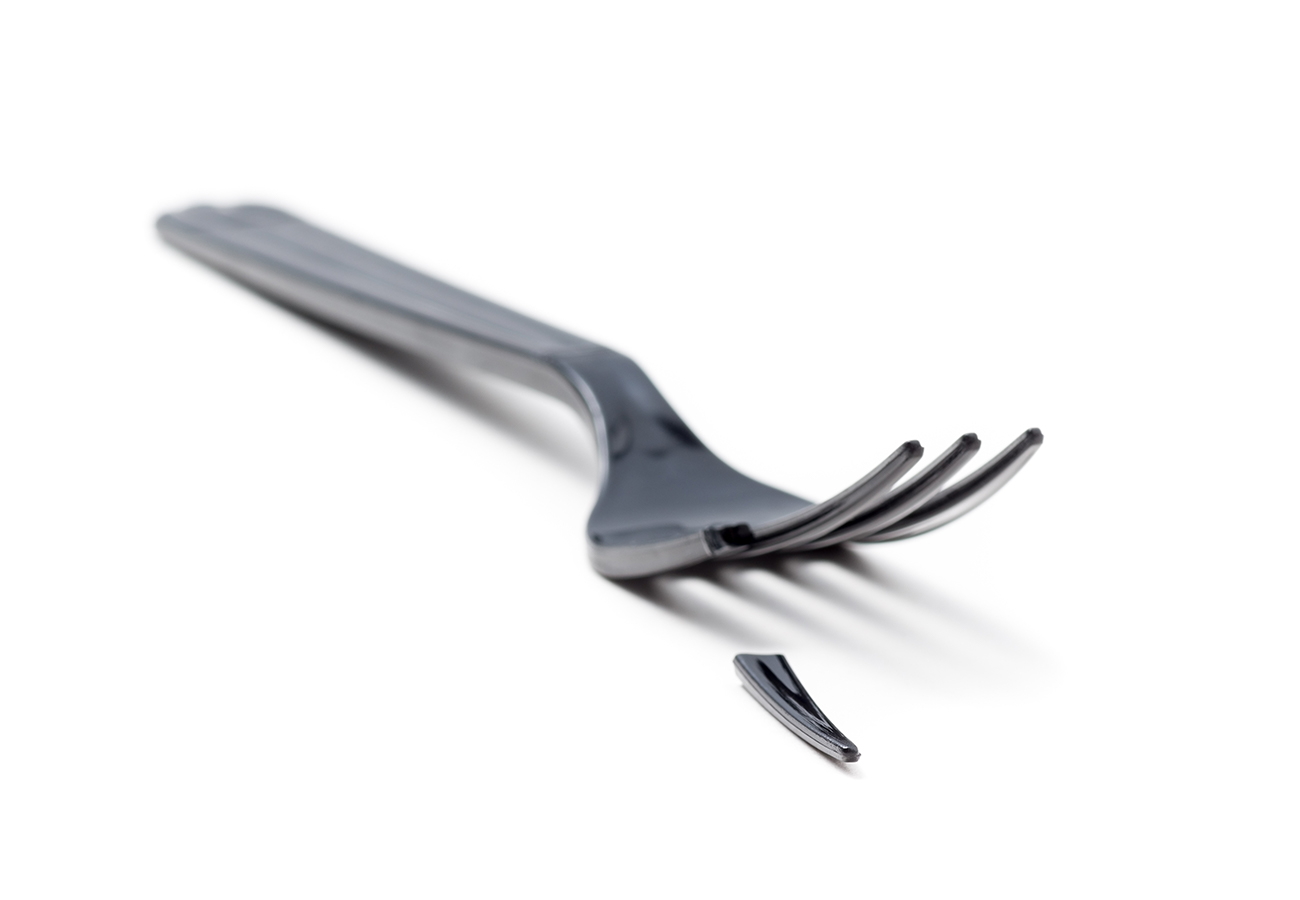
These plastics become malleable at higher temperatures and liquefy. After shaping, they cool down and retain the required shape of the finished component with the corresponding material properties. Thermoplastics can be processed using a variety of methods, the most common being injection molding, extrusion, blow molding, film blowing and calendering. Thermoplastics can also be joined using ultrasonic, friction and laser welding processes.

Materials
Thermoset – dimensionally stable, chemical and temperature resistant.
Thermosets are only plastically deformable at high temperatures during the shaping process. Once they have hardened, they retain their shape and hardness even when exposed to heat. This is due to their unique molecular cross-linking, which gives them distinct physical properties. Their strength, weight and cost-effectiveness make thermosets ideal for technological applications.
Thermoset - High-strength, temperature and chemical-resistant material for technical applications
Thermosets are increasingly being used in areas that were previously reserved for metallic materials. This is because they are dimensionally stable, thermally stable, chemically resistant and hard. The possible range of applications is constantly expanding thanks to advances in materials research and processing technology. In many areas, thermosets now offer clear technical, structural and cost advantages over metals.
There are two main types of thermosets: free-flowing thermosets and doughy, pasty BMC/SMC moulding compounds. SMC and BMC moulding compounds are based on a styrene-containing polyester resin. The delivery form is pasty. Special feeding equipment is therefore required for processing (e.g. so-called tampers).
Free-flowing thermoset moulding compounds are granulated and can be fed via standard hoppers.
Fields of application:
Replacement of technical metal parts as a lightweight construction variant, replacement of metals with the same linear expansion factors, use for highly stressed, extremely smooth and precise surfaces.